

 SEARCH

Links Outreach Agency

January 4th, 2026
posted by Radomir Basta to backlink outreach agency, earned media backlinks, link building outreach services, link outreach agency, links outreach agencyIf links don’t move traffic or rankings, the problem isn’t just the agency you hired. It’s the technical foundation they’re building on. Link equity flows through architecture – crawlability, internal linking, and page-level authority determine whether editorial placements drive results or get buried in technical debt.
Most outreach vendors promise quantity. They deliver spreadsheets with DR scores and call it success. Few prove editorial quality, brand safety, or their ability to move business KPIs without adding link risk. Fewer still coordinate with your technical team to ensure placements actually reach and benefit your money pages.
This guide provides a weighted evaluation framework to identify agencies that secure high-quality, white-hat editorial links while respecting your technical constraints and compliance requirements. You’ll get a scorecard template, red flags matrix, and pilot structure to de-risk vendor selection.
Set Clear Objectives and Risk Boundaries
Start by defining what success looks like for your organization. Vague goals produce vague results. Outreach campaigns need measurable outcomes tied to business impact.
Define Business Outcomes
Link your outreach objectives to metrics that matter:
- Referral traffic from placements to priority landing pages
- Ranking improvements for target keyword clusters within 90 days
- Assisted conversions tracked through multi-touch attribution
- Topic authority signals measured by semantic relevance of linking domains
Avoid vanity metrics. DR alone tells you nothing about traffic potential or topical fit. A DR 70 site with zero organic traffic and unrelated content adds no value.
Establish Risk Tolerance
Document your non-negotiables before evaluating vendors:
- Zero paid links or sponsored placements disguised as editorial
- No private blog networks or link schemes
- Strict brand safety standards for publisher selection
- Compliance requirements specific to your industry
- Legal review process for content and agreements
Enterprises in regulated industries need vendors who understand disclosure requirements and editorial independence. If your legal team needs to review every placement, factor that into timelines and costs.
Map KPIs to Outreach Stages
Track leading and lagging indicators:
- Prospecting quality – percentage of targets matching your criteria
- Acceptance rate – pitches resulting in confirmed placements
- Editorial placements – percentage earning genuine editorial approval
- Placement context – in-content links with natural anchors vs. resource pages
- Traffic impact – referral visits and ranking lift within 60-90 days
Audit Technical Readiness Before Outreach
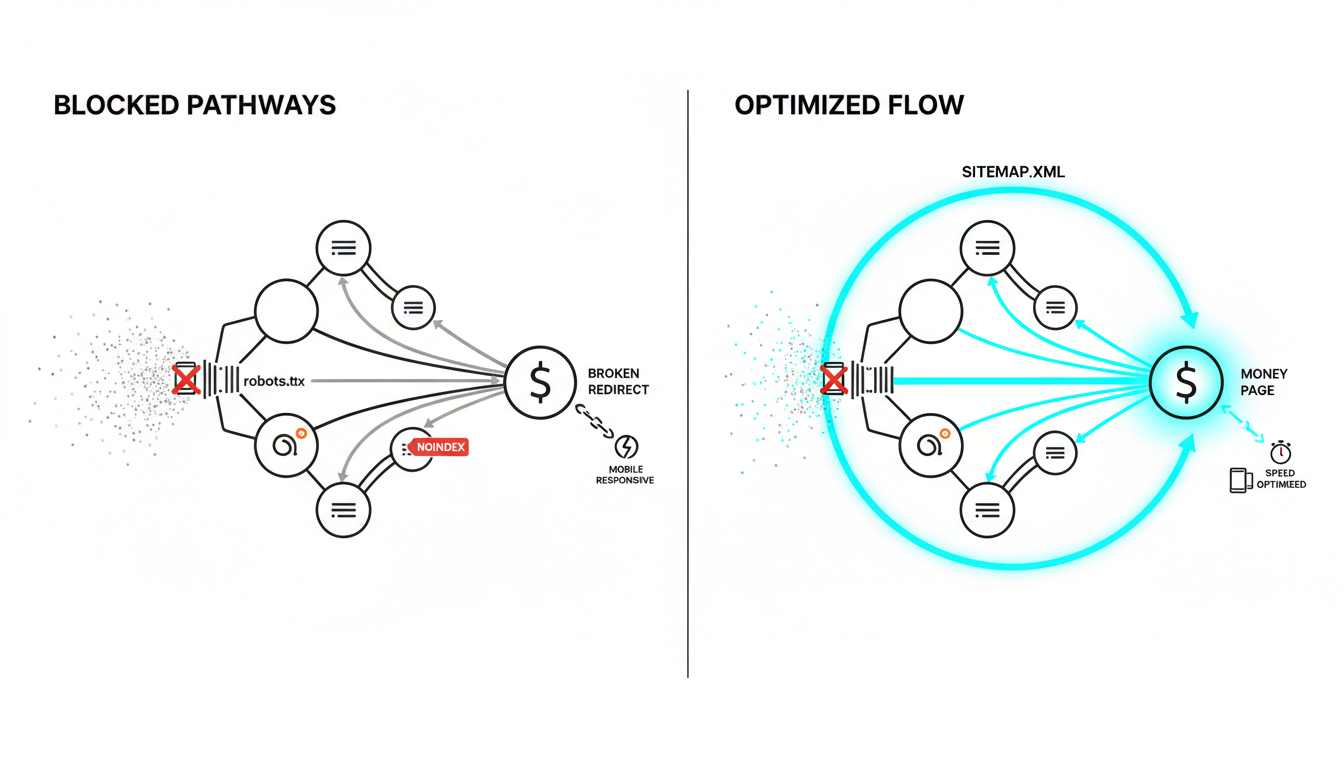
The best outreach campaign fails if your site can’t capture and distribute link equity. Technical blockers kill ROI faster than bad placements.
Before spending on outreach, validate your technical foundation. If crawlability issues prevent Googlebot from discovering new links, or internal linking fails to route equity to money pages, you’re burning budget. Consider a technical SEO audit to identify and resolve blockers that limit link impact.
Crawlability and Indexation
Confirm search engines can discover and index pages receiving links:
- Resolve canonical conflicts that consolidate equity away from target pages
- Fix robots.txt blocks preventing crawler access
- Address noindex tags on pages you want to rank
- Verify XML sitemaps include all priority pages
- Check server response codes and redirect chains
Internal Linking Architecture
External links only help if internal architecture distributes their value:
- Map link flow from high-authority pages to conversion paths
- Identify orphan pages that receive no internal links
- Fix broken internal links that leak equity
- Optimize anchor text distribution across internal links
- Ensure navigation supports discoverability of priority pages
Performance and User Experience
Technical health affects both rankings and referral traffic conversion:
- Core Web Vitals scores meeting Google thresholds
- Mobile responsiveness across devices and screen sizes
- Template hygiene eliminating layout shifts and render delays
- Fast server response times under traffic load
Publishers linking to slow, broken pages damage their own user experience. They’ll remove those links or avoid linking again.
Define Quality Criteria for Link Placements
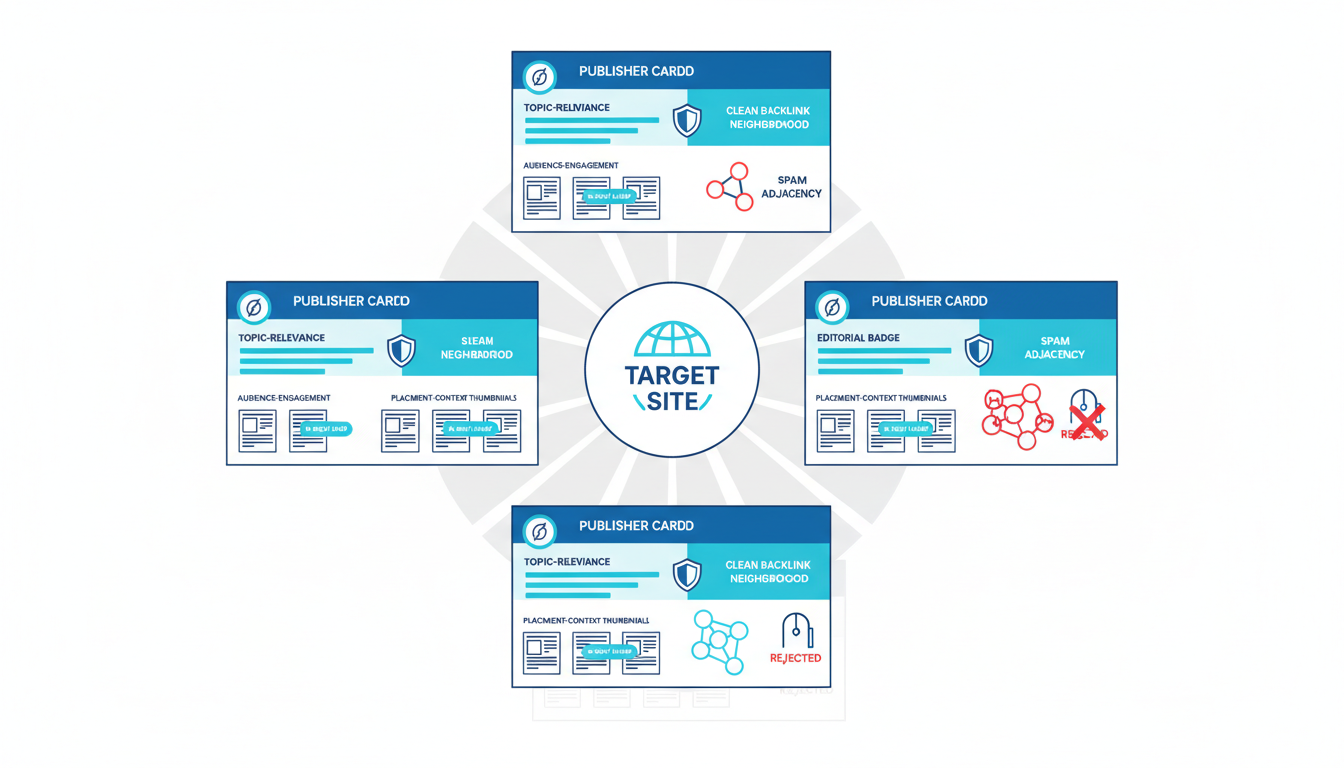
Create a checklist vendors must follow when evaluating prospects. Quality standards prevent toxic links and ensure placements drive results.
Publisher Standards
Evaluate sites based on editorial integrity and audience fit:
- Topical relevance – publisher covers your industry or adjacent topics
- Audience quality – engaged readers matching your customer profile
- Editorial guidelines – clear standards for content and contributor vetting
- Traffic patterns – consistent organic traffic to relevant pages
- Historical stability – domain age and consistent publishing cadence
Placement Context Requirements
Specify where and how links must appear:
- In-content editorial links – embedded naturally within article body
- Contextual relevance – surrounding content supports the link
- Natural anchor text – descriptive phrases, not exact-match keywords
- Non-sponsored disclosure – no payment or exchange for placement
- Follow attributes – links pass equity unless editorially nofollowed
Link Neighborhood Analysis
Assess the company your link keeps on target pages:
- No spam adjacency in outbound link profile
- Clean backlink profile without PBN patterns
- Reasonable outbound link count per page
- Quality of other sites linked from the same page
Metrics Beyond Domain Rating
Evaluate prospects using multiple signals:
- Organic traffic – actual visitors, not just DR potential
- Category relevance – topical authority in your industry
- Engagement metrics – time on site and pages per session
- Conversion potential – audience likely to take action
- Content freshness – active publishing schedule
Evaluate Outreach Process and Operations
Process quality determines whether agencies can deliver results repeatedly. One-off wins don’t scale.
Prospecting Methodology
Ask vendors to explain their research process:
- How they build prospect lists matching your criteria
- Tools and databases used for publisher discovery
- Topical mapping connecting your content to relevant publications
- Competitor backlink analysis to identify opportunities
- Vetting process before adding prospects to outreach lists
Email Deliverability and Personalization
Outreach effectiveness depends on reaching decision-makers:
- Domain reputation management – dedicated sending domains with proper authentication
- Personalization depth – specific references to publisher content and audience
- Pitch frameworks – value propositions tailored to editor needs
- Follow-up sequences – persistence without spam behavior
- Response handling – professional communication and relationship building
Content Collaboration Standards
Understand how vendors work with editors:
- Content briefs – specifications provided to writers
- Byline options – guest posts vs. editorial mentions
- Review cycles – editorial feedback and revision process
- Quality control – internal review before submission
- Publication timeline – average time from pitch to live link
Quality Assurance and Rejection Handling
Request transparency on performance:
- Sample pitch emails and editor responses
- Acceptance rates across recent campaigns
- Rejection reasons and how they inform strategy
- Process for handling editorial changes to content
- Monitoring for link removal or nofollow additions
Vendors hiding rejection data or claiming 90%+ acceptance rates are lying. Editorial placements involve rejection. The question is whether they learn from it.
Establish Reporting Standards and KPIs
Select vendors you can measure objectively. Transparent reporting separates professionals from order-takers.
Leading Indicators
Track operational metrics that predict success:
- Response rate – percentage of prospects replying to outreach
- Acceptance rate – pitches converting to confirmed placements
- Time to publish – days from acceptance to live link
- Placement quality score – weighted rating based on your criteria
- Content approval rate – submissions accepted without major revisions
Placement Quality Scoring
Rate each link using consistent criteria:
- Context relevance (1-5) – how naturally the link fits
- Anchor text quality (1-5) – descriptive and natural vs. forced
- Page traffic potential (1-5) – organic visibility of linking page
- Topical authority (1-5) – publisher expertise in your category
- Audience alignment (1-5) – reader match to customer profile
Lagging Indicators
Measure business impact over time:
- Ranking lift – position improvements for target keyword clusters
- Referral traffic – visitors from linking domains
- Assisted conversions – multi-touch attribution showing link influence
- Topic authority growth – semantic relevance improvements
- Competitive gap closure – backlink profile relative to competitors
Sample Reporting Schema
Request monthly reports including:
- Placement inventory with URLs, anchors, and quality scores
- Prospect outreach summary with response and acceptance rates
- Traffic and ranking data for pages receiving links
- Quality assurance notes and editorial feedback
- Next month pipeline and strategic recommendations
Vendors should provide raw data exports, not just summary slides. You need access to placement details for your own analysis.
Address Compliance and Brand Safety
Protect brand equity through explicit standards. One toxic link can trigger manual actions requiring months to resolve.
Contractual Safeguards
Include specific language in vendor agreements:
- Explicit prohibition of paid links and sponsored placements
- Rejection of private blog networks and link schemes
- Requirement for editorial approval of all placements
- Indemnification for violations of search engine guidelines
- Right to audit prospect lists and outreach communications
Editor Agreements and Disclosures
Ensure proper documentation:
- Written confirmation of editorial independence
- Clear disclosure requirements if any compensation involved
- Content ownership and usage rights
- Process for requesting link removal if needed
- Contact information for ongoing relationship management
Industry-Specific Requirements
Consider regulatory constraints for your sector:
Watch this video about links outreach agency:
- Finance and insurance – compliance review of content claims
- Healthcare – medical accuracy and HIPAA considerations
- Legal services – bar association rules on advertising
- Government contractors – security clearance and disclosure rules
Vendors working across industries may not understand your specific constraints. Educate them upfront or find specialists.
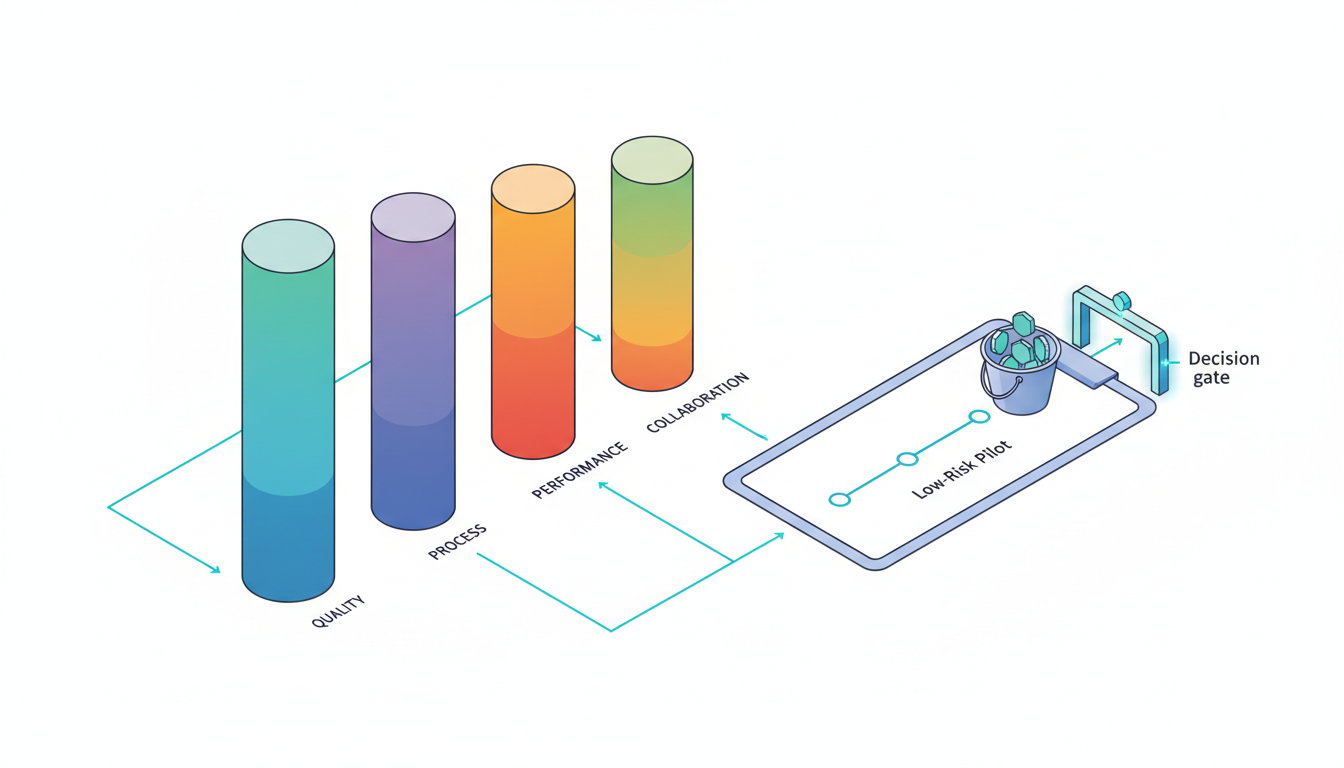
Run a Paid Pilot with Weighted Scoring
Test vendors with a low-risk pilot before committing to long-term contracts. Pilots reveal operational reality that sales calls hide.
Define Pilot Scope
Structure a 60-90 day engagement:
- Budget allocation – enough to secure 5-10 quality placements
- Target publications – specific prospect list you both agree on
- Success criteria – minimum acceptance rate and quality scores
- Reporting cadence – bi-weekly check-ins and monthly summaries
- Extension decision point – clear go/no-go criteria at pilot end
Apply Weighted Vendor Scorecard
Evaluate agencies across five dimensions:
- Quality (35%) – placement context, publisher standards, link neighborhood
- Process (20%) – prospecting methodology, personalization, QA rigor
- Performance (20%) – acceptance rate, time to publish, leading indicators
- Compliance (15%) – adherence to guidelines, documentation, brand safety
- Collaboration (10%) – communication, responsiveness, strategic input
Score each dimension 1-10 and calculate weighted average. Set a minimum threshold (7.0+) for contract extension.
Decision Gates and Extension Criteria
Establish clear milestones:
- 30 days – prospect list approved, first pitches sent, initial responses received
- 60 days – minimum 3 placements live, quality scores calculated, traffic data available
- 90 days – full scorecard evaluation, ROI analysis, extension decision
Don’t extend based on promises. Require demonstrated performance against your weighted criteria.
Recognize Red Flags and Ask Sharp Questions
Eliminate vendors quickly by spotting warning signs. Red flags save months of wasted budget.
Immediate Disqualifiers
Walk away if vendors exhibit these behaviors:
- Guaranteed DR or placement promises – no legitimate agency controls editorial decisions
- Vendor-owned site networks – private blog networks by another name
- Lack of sample placements – can’t show recent work with live links
- High volume, thin personalization – spray-and-pray outreach at scale
- No rejection data – claims unrealistic acceptance rates
- Opaque pricing – won’t explain cost structure or provide itemized quotes
Interview Questions to Ask
Probe operational reality with specific questions:
- Show me 10 recent placements – live links with context visible
- What’s your typical acceptance rate? – by industry and publisher tier
- How do you handle rejections? – process for learning and iteration
- Can I see sample pitch emails? – actual communications with editor responses
- What’s your vetting process for prospects? – criteria and tools used
- How do you measure placement quality? – beyond DR and traffic
- What compliance documentation do you provide? – editorial confirmations and agreements
- How do you coordinate with technical teams? – process for addressing site issues
Warning Signs During Pilots
Monitor for concerning patterns:
- Placements on sites with suspicious backlink profiles
- Links appearing in footers or sidebars instead of content
- Anchor text that’s overly optimized or unnatural
- Publishers requesting payment after initial approval
- Lack of editorial communication or content feedback
- Missed deadlines without proactive communication
Implementation Tools and Templates
Use these resources to operationalize your evaluation process:
Downloadable Vendor Scorecard
A weighted rubric template covering all evaluation dimensions. Score vendors consistently across quality, process, performance, compliance, and collaboration criteria.
Email Quality Checklist
Audit sample pitches for:
- Specific personalization referencing publisher content
- Clear value proposition for editor and audience
- Professional tone without sales language
- Appropriate follow-up sequence and timing
- Compliance with anti-spam regulations
Technical Readiness Assessment
Verify your site can maximize link impact:
- Crawlability and indexation status of priority pages
- Internal linking architecture routing equity effectively
- Core Web Vitals and performance benchmarks
- Mobile responsiveness and user experience quality
- Tracking implementation for attribution analysis
For comprehensive technical SEO audits that identify and prioritize fixes, consider partnering with specialists who coordinate implementation alongside outreach campaigns.
Frequently Asked Questions
How do I verify an agency follows white-hat practices?
Request sample placements with visible editorial context. Check linking domains for organic traffic and clean backlink profiles. Ask for written confirmation that no payment exchanges hands for links. Review their contract language on compliance and indemnification. Legitimate agencies document editorial independence.
What acceptance rate should I expect from quality outreach?
Editorial placements typically convert at 5-15% depending on industry, publisher tier, and content quality. Higher rates suggest paid placements or low-quality targets. Lower rates may indicate poor prospecting or weak pitches. Track this metric over time as vendors refine their approach.
Should I prioritize DR or organic traffic when evaluating prospects?
Organic traffic indicates actual audience and search visibility. A site with DR 40 and 10,000 monthly visitors outperforms DR 70 with zero traffic. Combine metrics – look for domains with both authority signals and engaged audiences in your topic area.
How long until I see ranking improvements from new links?
Expect 60-90 days for Google to discover, process, and weight new links. Impact depends on technical readiness, internal linking, and placement quality. Track leading indicators like referral traffic and crawl activity before rankings shift. Some competitive keywords take 6+ months to move meaningfully.
What’s a reasonable monthly budget for quality outreach?
Budget varies by industry and goals. Expect $3,000-$10,000 monthly for 5-10 quality editorial placements. Lower budgets limit prospect quality and personalization depth. Higher budgets enable more selective targeting and content investment. Factor in content creation, outreach labor, and relationship management.
How do I handle vendors who guarantee specific DR or placement counts?
Walk away. No legitimate agency controls editorial decisions or can guarantee specific metrics. These promises indicate paid links, PBNs, or other scheme tactics that violate search engine guidelines. Focus on vendors who discuss acceptance rates, quality criteria, and performance tracking instead.
Should outreach agencies also handle content creation?
Many do, but verify writing quality and subject matter expertise. Request samples and check if they employ in-house writers or outsource. Some agencies excel at outreach but produce mediocre content. Others integrate both effectively. Consider splitting services if your team produces better content internally.
How do I measure ROI from link building campaigns?
Track multi-touch attribution connecting placements to conversions. Monitor ranking improvements for target keywords and resulting traffic growth. Calculate referral traffic value and assisted conversion revenue. Compare cost per quality placement against customer acquisition costs. ROI becomes clear 6-12 months into consistent campaigns.
Make the Right Agency Selection
Choosing a links outreach agency requires rigorous evaluation across quality, process, performance, and compliance dimensions. The vendors who deliver measurable results understand that link equity flows through technical architecture – they coordinate with your technical team rather than working in isolation.
Use the weighted scorecard to compare agencies objectively. Run paid pilots before committing to long-term contracts. Demand transparency on acceptance rates, placement quality, and rejection handling. Protect brand safety through explicit contractual language and compliance documentation.
Most importantly, validate your technical readiness before scaling outreach. Links only move the needle when crawlability, internal linking, and site performance support equity distribution to your money pages. Learn how technical-first agencies coordinate implementation alongside outreach to maximize ROI.
Start with clear objectives, measurable KPIs, and defined risk thresholds. Test vendors against those standards. Scale what works and cut what doesn’t. The right agency becomes a strategic partner who understands your business constraints and delivers links that drive growth.
Ready to ensure your site can maximize returns from SEO outreach services? Validate your technical foundation first. Request a strategic technical SEO audit to identify and prioritize fixes that unlock link equity impact.