

 SEARCH

Complete Technical SEO Audit Service Guide

November 23rd, 2025
posted by Radomir Basta to architectural analysis, strategic roadmap, technical seo audit serviceUnderstanding Technical SEO Audit Service: The Fundamentals
Most enterprise websites suffer from invisible technical problems that quietly drain organic traffic and revenue. A technical SEO audit service identifies these hidden issues before they become expensive disasters.
The difference between surface-level checks and true architectural analysis determines whether you get a generic report or a solution that actually works. Generic audits list problems. Engineering-driven audits design fixes that development teams can implement with confidence.
Here’s what separates real technical audits from checkbox exercises:
- Architectural depth – Analysis of site structure, not just individual page issues
- Implementation coordination – Direct liaison with your dev team to ensure precise execution
- Performance monitoring – Daily tracking post-launch to validate improvements
- Strategic roadmap – Prioritized fixes sequenced for maximum impact
- Migration oversight – Pre, during, and post-launch validation for platform changes
Enterprise sites face unique challenges. Complex information architecture creates cannibalization risks. Large-scale migrations can destroy years of organic traffic gains in hours. Development teams need precise specifications, not vague recommendations.
Core Components of Enterprise Technical Audits
A comprehensive technical SEO audit service examines multiple critical areas. Each component requires specialized expertise and purpose-built tools.
Site architecture analysis reveals how search engines understand your content hierarchy. Poor structure causes keyword cannibalization where multiple pages compete for the same rankings. This wastes link equity and confuses search algorithms.
Crawl efficiency optimization ensures search bots spend their limited time on your most valuable pages. Enterprise sites with thousands of URLs need intelligent crawl budget allocation. Wasted crawl budget means important pages stay invisible in search results.
Technical infrastructure assessment identifies performance bottlenecks that hurt both user experience and search rankings. Page speed, mobile responsiveness, and Core Web Vitals directly impact your position in search results.
- Server response time analysis and optimization recommendations
- JavaScript rendering issues that hide content from search bots
- Mobile-first indexing compliance verification
- Schema markup implementation for enhanced search features
- XML sitemap optimization for efficient content discovery
Why Generic Audits Fail Enterprise Organizations
Most audit tools generate automated reports listing hundreds of issues without context. Development teams receive these reports and have no clear path forward. Which fixes matter most? How do changes impact other systems? What’s the expected outcome?
Enterprise marketing leadership needs more than problem lists. You need clear answers to executive questions about ROI, timeline, and resource requirements. Generic audits can’t provide this because they don’t understand your business context or technical constraints.
The real cost shows up months later. Development teams implement fixes based on incomplete information. Changes break other functionality. Rankings don’t improve because the audit missed root causes. Budget gets wasted on low-impact work while critical issues remain unaddressed.
Evaluating Technical SEO Audit Service Options
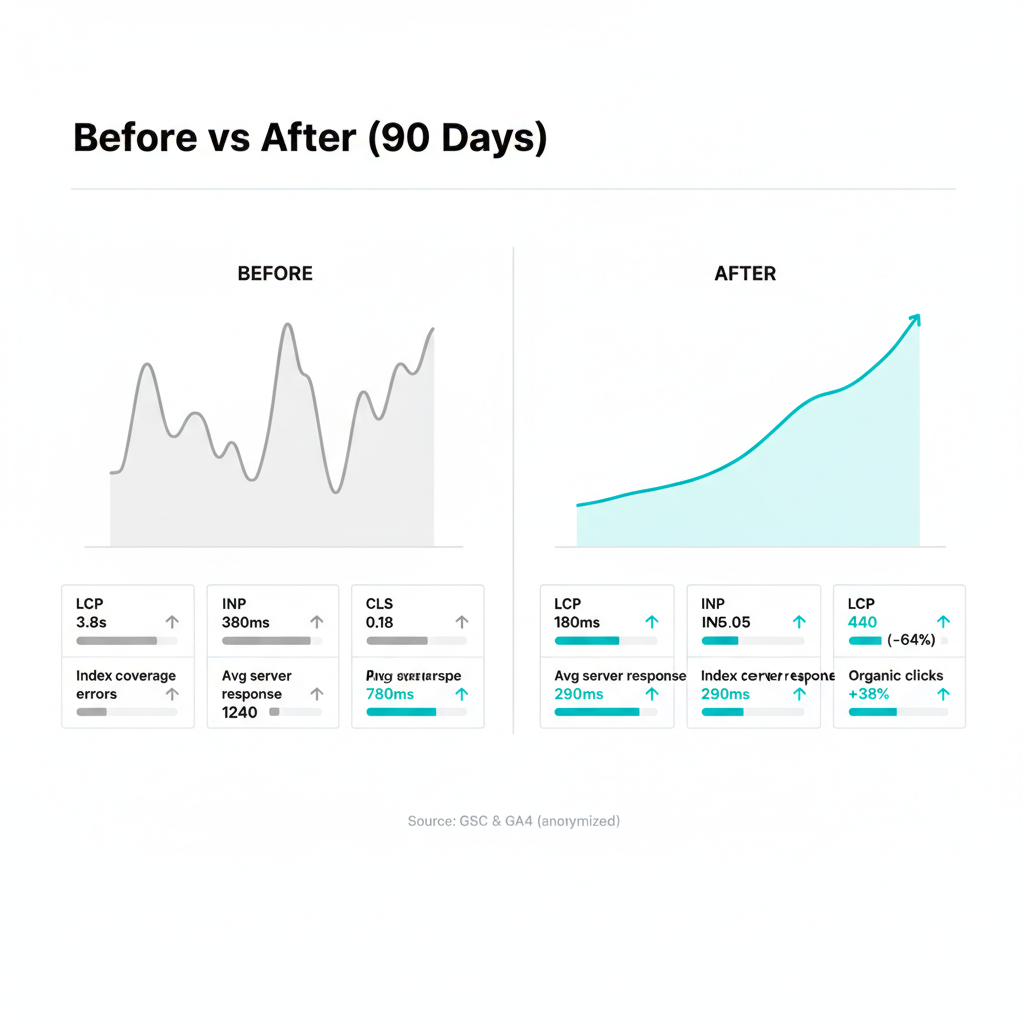
Choosing the right technical SEO audit service requires understanding what differentiates real solutions from expensive reports. The market offers everything from automated tools to boutique consultancies, but few deliver measurable results for enterprise organizations.
Key Evaluation Criteria for Enterprise Audits
Start by examining the audit methodology. Does the service perform architectural analysis or just run automated scans? Real audits require human expertise to understand complex site structures and business requirements.
Implementation support separates valuable partners from report generators. Can they coordinate directly with your engineering team? Do they provide detailed specifications developers can execute without guesswork?
Look for these critical capabilities:
- Strategic roadmap delivery with prioritized fixes sequenced by impact and dependencies
- Direct development team coordination to ensure precise implementation
- Post-implementation monitoring to validate improvements and catch regressions
- Experience with enterprise-scale migrations and platform changes
- Proprietary tools that go beyond standard audit software
Comparing Audit Approaches and Their Outcomes
Automated tool-based audits cost less but miss critical issues that require human analysis. They identify technical violations but can’t evaluate business impact or recommend optimal solutions for your specific situation.
Consultant-led audits provide deeper analysis but vary wildly in quality. Some consultants excel at finding problems but struggle with practical implementation guidance. Others understand development but lack strategic vision for sequencing fixes.
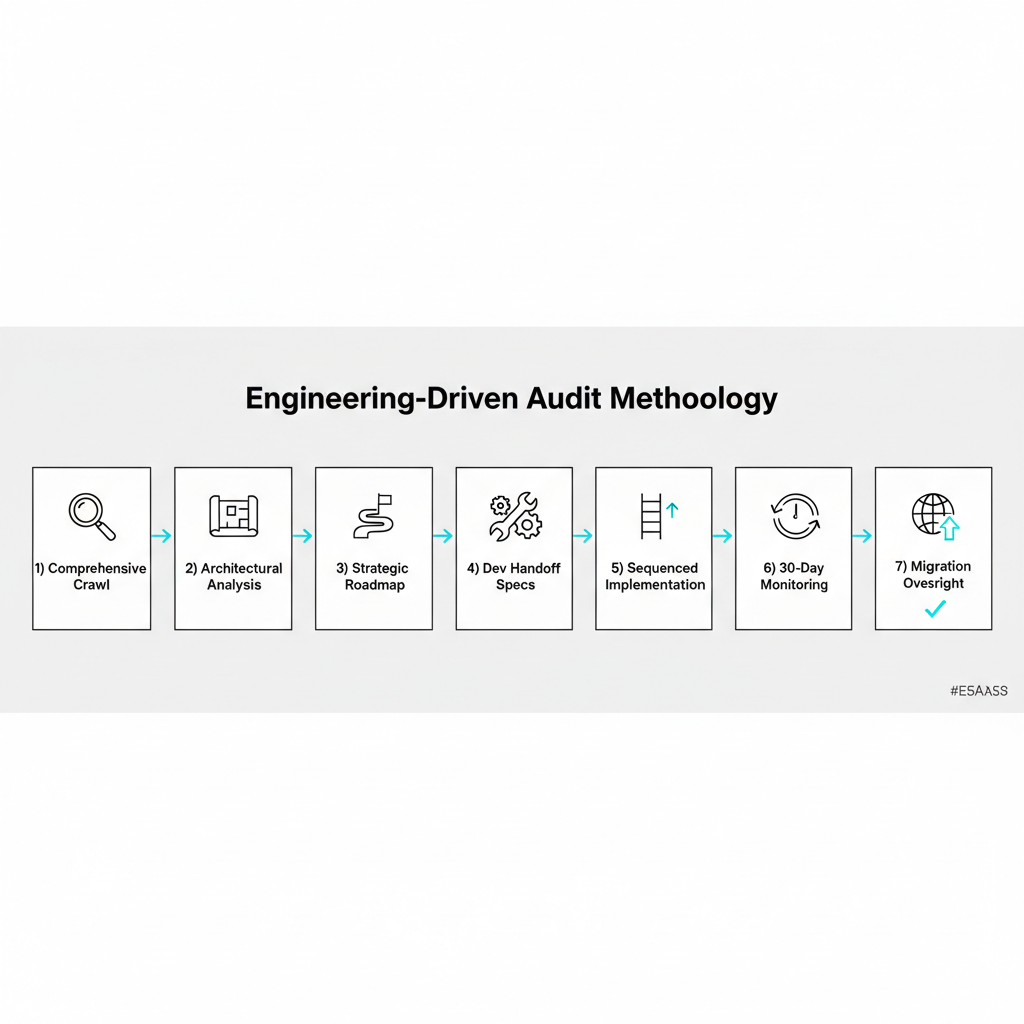
The engineering-driven approach combines technical depth with implementation precision. This model treats audits as architectural projects rather than compliance exercises. Every recommendation includes detailed specifications, expected outcomes, and validation criteria.
- Comprehensive site crawl using proprietary tools to identify all technical issues
- Architectural analysis to understand root causes and system relationships
- Strategic roadmap development prioritizing fixes by impact and effort
- Implementation coordination with direct development team liaison
- Performance monitoring with daily checks for 30 days post-launch
ROI Considerations and Cost Analysis
Enterprise technical SEO audits range from $5,000 for basic automated reports to $50,000+ for comprehensive architectural assessments with implementation support. The price difference reflects the depth of analysis and level of support provided.
Calculate ROI by estimating the cost of technical issues. A single failed migration can destroy millions in organic traffic value. Ongoing technical problems silently drain revenue month after month. The right audit service pays for itself by preventing these disasters.
Consider total cost of ownership beyond the initial audit fee. Cheap audits often require expensive follow-up work to interpret recommendations and create implementation plans. Premium services include this coordination, reducing your total investment.
Track these metrics to measure audit service value:
- Organic traffic recovery or growth within 90 days post-implementation
- Reduction in crawl errors and technical warnings in Search Console
- Improvement in Core Web Vitals and page speed scores
- Development team velocity – time saved on implementation vs. interpretation
- Prevention of revenue loss during migrations or major site changes
The best technical SEO audit service delivers measurable improvements within 60-90 days. If you can’t track clear before-and-after metrics, you’re paying for reports rather than results.
Advanced Technical SEO Audit Insights
Enterprise organizations face technical challenges that standard audits completely miss. These advanced issues require specialized expertise and custom analysis to identify and solve.
Real-World Implementation Challenges
Development teams at large companies work within complex constraints. Legacy systems, compliance requirements, and competing priorities create implementation challenges that generic audit recommendations ignore.
A major e-commerce platform discovered this during a planned migration. Their automated audit identified 2,000+ technical issues but provided no guidance on sequencing or dependencies. The development team spent three months trying to prioritize fixes before bringing in specialized help.
The engineering-driven audit revealed that 80% of flagged issues were symptoms of five core architectural problems. Fixing these root causes eliminated most downstream issues automatically. Implementation time dropped from an estimated 12 months to 6 weeks.
Key lessons from enterprise implementations:
- Most technical issues cluster around a few root causes that automated tools miss
- Implementation sequencing matters as much as identifying problems
- Development teams need precise specifications, not vague recommendations
- Post-implementation monitoring catches regressions before they impact rankings
- Migration oversight requires pre-launch validation and 30-day monitoring
Expert Perspectives on Audit Quality
Senior technical SEO professionals distinguish between audits that find problems and audits that architect solutions. The difference shows up in implementation success rates.
One enterprise CMO described receiving a 300-page audit report from a well-known agency. The report listed hundreds of issues but provided no context for business impact or implementation complexity. Her development team couldn’t use it without extensive additional analysis.
Contrast this with an engineering-driven approach. The audit delivered a 50-page strategic roadmap with issues prioritized by impact, grouped by system dependencies, and sequenced for efficient implementation. Each recommendation included detailed specifications and expected outcomes.
The development team completed implementation in half the estimated time because they didn’t waste weeks interpreting vague recommendations. Performance monitoring validated improvements with daily checks, catching two regressions before they impacted traffic.
Actionable Takeaways for Enterprise Marketing Leadership
Evaluate potential audit partners by asking specific questions about their methodology and support model. Can they explain their approach to architectural analysis? Do they coordinate directly with development teams? What happens after they deliver the audit report?
Demand clear success metrics before engagement. What specific improvements should you expect within 90 days? How will they validate that implementations achieved intended outcomes? What recourse do you have if recommendations don’t deliver results?
Consider these advanced capabilities when selecting a service:
- Link profile audit – Competitive gap analysis and risk assessment for your backlink portfolio
- Information architecture optimization – Preventing keyword cannibalization at scale
- GA4 integration – Ensuring analytics accurately track technical improvements
- Custom tool development – Proprietary solutions for your specific technical challenges
- Continuous monitoring – Daily health checks for 30+ days post-implementation
The right technical SEO audit service becomes a strategic partner in derisking major initiatives. They understand both search optimization best practices and enterprise development realities. This combination delivers implementations that actually work rather than reports that gather dust.
Technical SEO Audit Service Best Practices and Optimization

Successful technical audits follow proven methodologies that maximize implementation success and minimize wasted effort. These best practices separate effective audits from expensive documentation exercises.
Proven Implementation Best Practices
Start with clear success criteria before the audit begins. Define specific metrics you’ll track to measure improvement. Organic traffic growth, crawl error reduction, and Core Web Vitals scores provide objective validation.
Establish direct communication channels between the audit team and your development resources. Misunderstandings during implementation waste time and reduce effectiveness. Daily standups or weekly check-ins keep everyone aligned on priorities and blockers.
Phase implementations to validate improvements before moving to the next stage. This approach catches problems early and builds confidence in the audit recommendations. Quick wins in phase one create momentum for more complex changes later.
Essential best practices for audit success:
- Document baseline metrics before implementation starts
- Validate recommendations in staging before production deployment
- Monitor key metrics daily for 30 days post-implementation
- Schedule post-implementation reviews to assess actual vs. expected outcomes
- Maintain audit documentation for future reference and team onboarding
Common Mistakes That Derail Technical Audits
The biggest mistake is treating audits as one-time events rather than ongoing processes. Technical SEO requires continuous attention as search algorithms evolve and site complexity grows. Annual audits miss emerging issues that compound over time.
Another critical error is implementing recommendations without understanding their business context. Not all technical issues deserve equal priority. Focus on fixes that directly impact revenue-generating pages and user experience first.
Development teams often make changes without proper validation. A seemingly minor code update can break structured data, create redirect chains, or introduce crawl inefficiencies. Always test changes in staging and monitor production deployments closely.
Watch out for these implementation pitfalls:
- Fixing symptoms rather than root causes creates endless maintenance work
- Implementing too many changes simultaneously makes it impossible to isolate impact
- Skipping post-implementation monitoring means regressions go undetected
- Ignoring mobile-first indexing requirements focuses effort on desktop issues
- Neglecting search optimization fundamentals while chasing advanced tactics
Optimization Strategies for Maximum Impact
Prioritize fixes using a simple impact vs. effort matrix. High-impact, low-effort changes deliver quick wins that build momentum. Save complex, time-intensive projects for later phases when you’ve validated the audit’s value.
Focus on architectural improvements that prevent future problems rather than just fixing current issues. Proper information architecture prevents keyword cannibalization as you add content. Efficient crawl budget allocation ensures new pages get indexed quickly.
Leverage automation where possible but maintain human oversight. Automated monitoring catches regressions immediately. Regular manual reviews identify emerging patterns that automated tools miss. This combination provides comprehensive coverage without overwhelming your team.
Advanced optimization tactics include:
- Implementing progressive enhancement for JavaScript-heavy sites to ensure content accessibility
- Optimizing server response times through CDN configuration and caching strategies
- Structuring internal linking to distribute link equity efficiently across priority pages
- Coordinating technical fixes with content updates for compound improvements
- Building custom monitoring dashboards that track your specific success metrics
The most successful technical SEO programs combine rigorous audit methodology with disciplined implementation and continuous monitoring. This approach transforms audits from expensive reports into strategic assets that drive measurable business outcomes.
Enterprise organizations need partners who understand both technical depth and business realities. The right service delivers strategic roadmaps that development teams can execute with confidence, backed by performance monitoring that validates every improvement.
Frequently Asked Questions
How long does a comprehensive audit take?
A thorough enterprise audit typically requires 2-4 weeks for analysis, roadmap development, and initial implementation planning. The timeline varies based on site complexity, number of domains, and technical infrastructure. Rushed audits miss critical issues that become expensive problems later.
What’s included in implementation coordination?
Implementation coordination means direct liaison between audit experts and your development team. This includes detailed technical specifications for each fix, validation criteria, and ongoing support during deployment. The goal is eliminating interpretation gaps that slow implementation and reduce effectiveness.
How do you measure audit success?
Success metrics include organic traffic growth, crawl error reduction, improved Core Web Vitals scores, and faster indexing of new content. Track these metrics before implementation and monitor daily for 30+ days after deployment. Clear baseline measurements enable objective validation of audit value.
What happens if recommendations don’t work?
Quality audit services include post-implementation review and adjustment. If expected improvements don’t materialize within 60-90 days, the audit team investigates root causes and refines recommendations. This commitment to outcomes distinguishes strategic partners from report generators.
Can audits help with site migrations?
Yes, migration oversight is a critical audit service. Pre-launch validation catches issues before they impact traffic. During-migration monitoring identifies problems in real-time. Post-launch checks for 30 days ensure the new platform maintains search visibility and rankings.
How often should enterprise sites get audited?
Major comprehensive audits make sense annually or before significant platform changes. Quarterly mini-audits catch emerging issues early. Continuous monitoring between formal audits maintains site health and alerts teams to regressions that need immediate attention.
Making the Right Technical SEO Audit Choice
Selecting a technical SEO audit service determines whether you get actionable solutions or expensive documentation. The right partner delivers measurable improvements through engineering-driven analysis, precise implementation coordination, and continuous performance monitoring.
Enterprise organizations need more than problem lists. You need strategic roadmaps that development teams can execute with confidence. You need partners who understand both search optimization principles and enterprise development realities.
Key factors that predict audit success:
- Architectural analysis depth that identifies root causes, not just symptoms
- Direct implementation coordination that eliminates interpretation gaps
- Performance monitoring that validates improvements and catches regressions
- Proven enterprise track record with measurable outcomes
- Clear success metrics defined before engagement begins
The investment in quality technical audits pays dividends through prevented disasters, accelerated implementations, and sustained organic traffic growth. Generic audits waste budget on reports that development teams can’t use. Strategic audits become competitive advantages that compound over time.
Ready to move beyond checkbox audits? Request Technical Audit / Schedule Consultation to align scope, timeline, and success metrics.